
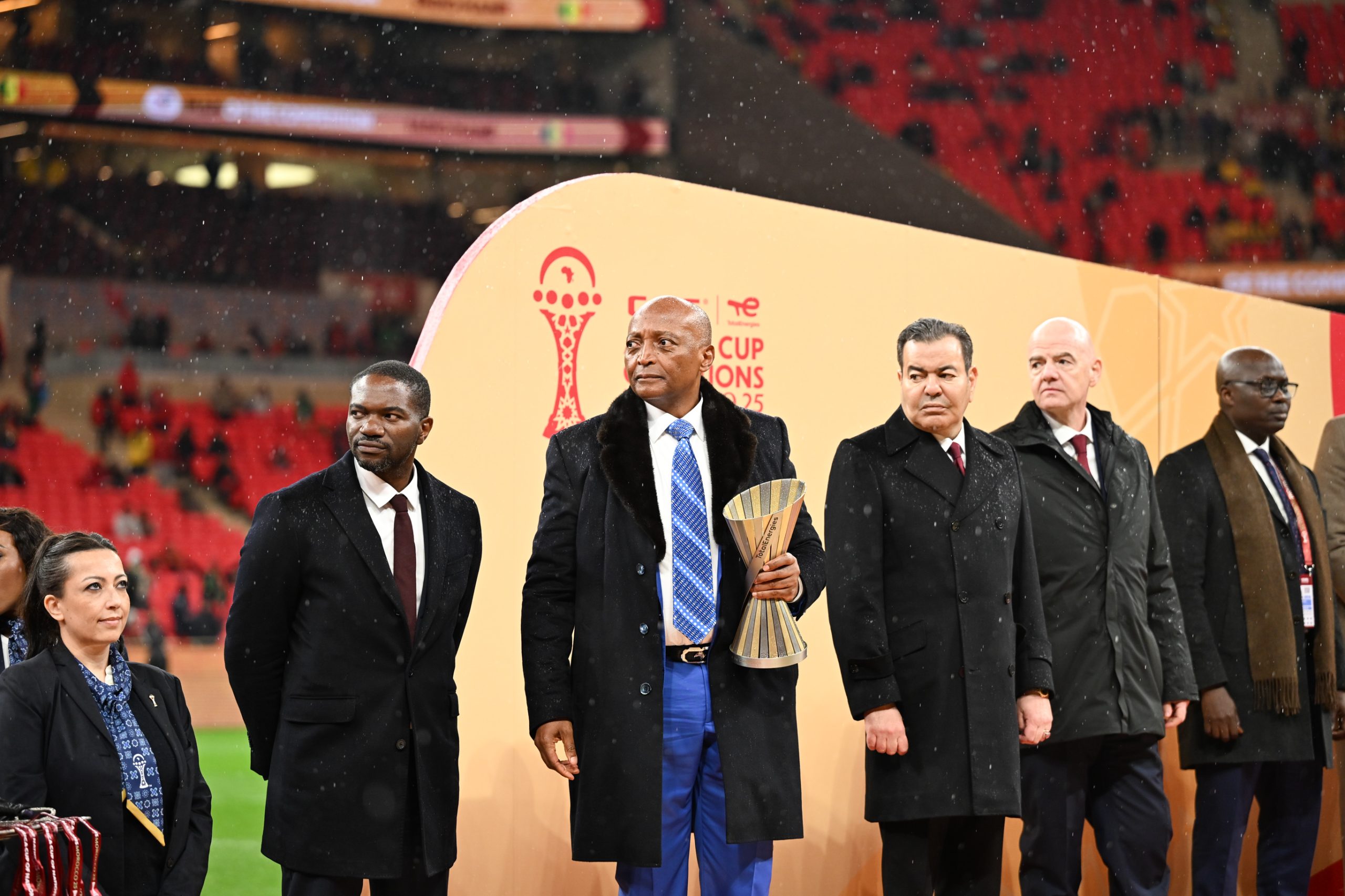
The Confederation of African Football (CAF) President Dr. Patrice Motsepe has broken his silence following the explosive ruling by the CAF Appeals Board that handed Morocco a 3–0 victory over Senegal in the AFCON 2025 final.
In a measured but firm response, Motsepe acknowledged the gravity of the situation, admitting the events surrounding the final had cast a shadow over the confederation’s ongoing efforts to rebuild trust in African football governance.
“What happened in that final undermined the good work that CAF has done over many years to ensure there’s integrity, respect, ethics and governance, as well as credibility of results in our football matches,” Motsepe said.
His words reflect the delicate balancing act CAF now faces — defending the credibility of its structures while addressing the growing perception problem among fans, stakeholders, and member associations.
The decision by the Appeals Board to overturn the initial outcome has reopened long-standing concerns around transparency and trust, and alleged corruption – something Motsepe did not shy away from.
“What happened in the final match in AFCON 2025 exposes the work that we are still dealing with in terms of suspicion and distrust. It’s a legacy issue,” he explained.
Since taking over CAF leadership, Motsepe has repeatedly emphasised reform, particularly in refereeing standards and judicial independence — two areas often criticised in the past. According to him, progress has been made, but the events of the final show the journey is far from complete.
“When I became President, one of the major concerns was the impartiality, independence and the respect of referees, match commissioners, where a lot of good work has been done,” he added.
“But there continues to be suspicions, because it’s a legacy issue that’s been there for many years, and we consistently deal with that — which is critically important.”
A key pillar of CAF’s reform agenda has been the restructuring of its judicial bodies. Motsepe was keen to stress that the current Disciplinary and Appeals Boards are composed differently from previous eras, in an effort to ensure credibility and independence.
“We, in choosing the members in our judicial bodies, followed a different path,” he said. “We invited each member association and the six regional zones in CAF to give names of judges and respected lawyers.”
This, he believes, has created panels made up of some of the continent’s most respected legal minds — a move designed to strengthen confidence in decisions that often carry massive sporting and financial consequences.
“It’s important because the decision of our disciplinary board and appeals board is viewed with respect and integrity,” Motsepe continued.
Ironically, the very independence of those bodies is now at the centre of the debate. The Disciplinary Board and Appeals Board reached different conclusions on the same matter — something Motsepe pointed to as proof that the system is functioning as intended.
“The independence is reflected by the decisions taken by the two bodies. The Disciplinary Board made a decision and the Appeals Board took a totally different decision,” he said.
With Senegal reportedly set to take the matter further, potentially to the Court of Arbitration for Sport (CAS), Motsepe reiterated CAF’s commitment to due process.
“Every one of the 54 nations in Africa have a right to pursue appeals… not only at CAF but even CAS — and we will adhere and respect the decision that is taken at the highest level.”
Despite the controversy, Motsepe was adamant that CAF will not waver in its principles.
“Not a single country in Africa will receive preferential treatment or more favourable than any other country on the continent,” he stressed.
For CAF, the stakes are clear. Beyond the result itself, the credibility of African football governance is under scrutiny once again — from officiating standards to judicial consistency.
“We take what happened in the final in Morocco very seriously and we have started with important steps so that the necessary solutions pass.”
“We have high standards and it’s important that football spectators, in their judgement — not CAF, not mine — regard the decisions of the judicial bodies as fair, with integrity and impartiality.”
As the saga edges closer to a potential CAS showdown, one thing is certain: while Morocco may have been declared champions on paper, the debate around AFCON 2025 is far from over.