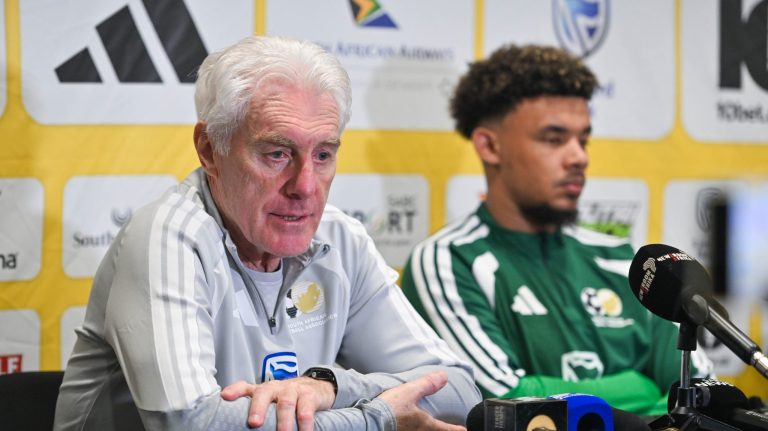

South Africa head coach Hugo Broos has expressed confidence in his squad’s readiness for the 2026 FIFA World Cup, pointing to the experience of his Mamelodi Sundowns-based players and a purposeful pre-tournament preparation camp as key factors heading into the tournament opener.
Bafana Bafana will make history as one of the host nations at the first-ever 48-team World Cup, a tournament shared across the United States, Canada, and Mexico. With the weight of an entire continent behind them, Broos has been deliberate in building a squad capable of handling the enormity of the occasion.
The Sundowns Factor
Central to Broos’s thinking is the role that players from Mamelodi Sundowns, arguably the most successful club side on the African continent, will play in steadying the ship when the pressure inevitably mounts.
“It’s very important to have those players, they are used to playing big games, African Champions League games, they have experience playing in front of big crowds,” Broos said. “There won’t be much South African supporters, so it’s a big help for the team for sure.”
The Brazilians’ dominance in the CAF Champions League has given a core group of Bafana players a baptism of fire in high-stakes continental football, an experience Broos clearly believes will translate to the grandest stage of all. In a stadium that will be overwhelmingly neutral or hostile, having players who have performed under pressure, away from home, in knockout football will be invaluable.
Preparing for a Different Kind of Football
Beyond personnel, Broos has also spoken candidly about the tactical intelligence behind South Africa’s pre-tournament schedule. Aware that Bafana had spent the bulk of the past four years competing almost exclusively against African opposition, the Belgian coach sought out exposure to a different style of play.
“Our preparation was good, playing against Panama and Nicaragua, Central American teams like Mexico — it was important to play against those teams,” he explained. “The last four years we only played African teams and the style of the two continents are different. The results weren’t important, but more the style and the experience of how they play, to have good preparation for the opener.”
It is a refreshingly pragmatic approach. Rather than chasing confidence-boosting wins, Broos prioritised tactical exposure and adaptability, ensuring his players would not be encountering an unfamiliar style of play for the first time on World Cup matchday.
A Nation’s Moment
South Africa last appeared at a World Cup in 2010, when they famously hosted the tournament on home soil. Sixteen years on, they return not as hosts in the traditional sense, but as participants sharing a stage with two other nations — and yet the symbolism remains profound.
For Broos, a coach who has navigated the complexities and politics of African football with considerable patience and persistence, this tournament represents the culmination of a careful, long-term project. The experienced Sundowns core, a tailored preparation programme, and a squad that has grown together over several years all point to a coach who has left little to chance.
Whether Bafana Bafana can translate preparation into performance when it matters most remains to be seen. But if Broos’s measured confidence is anything to go by, South Africa will not simply be turning up, they will be ready.